
Imperial Japanese Army Shō-5 I-gō Canteen
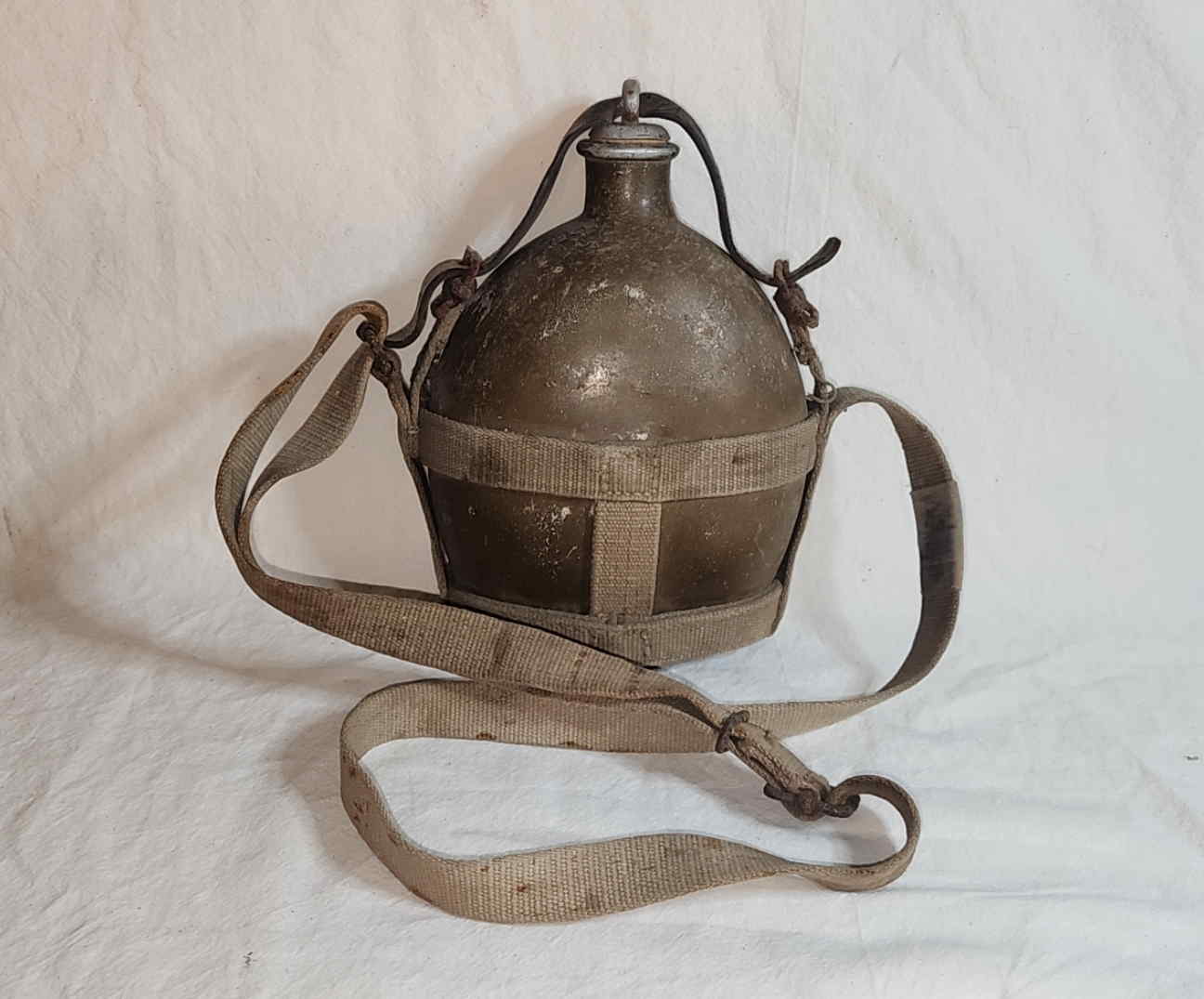
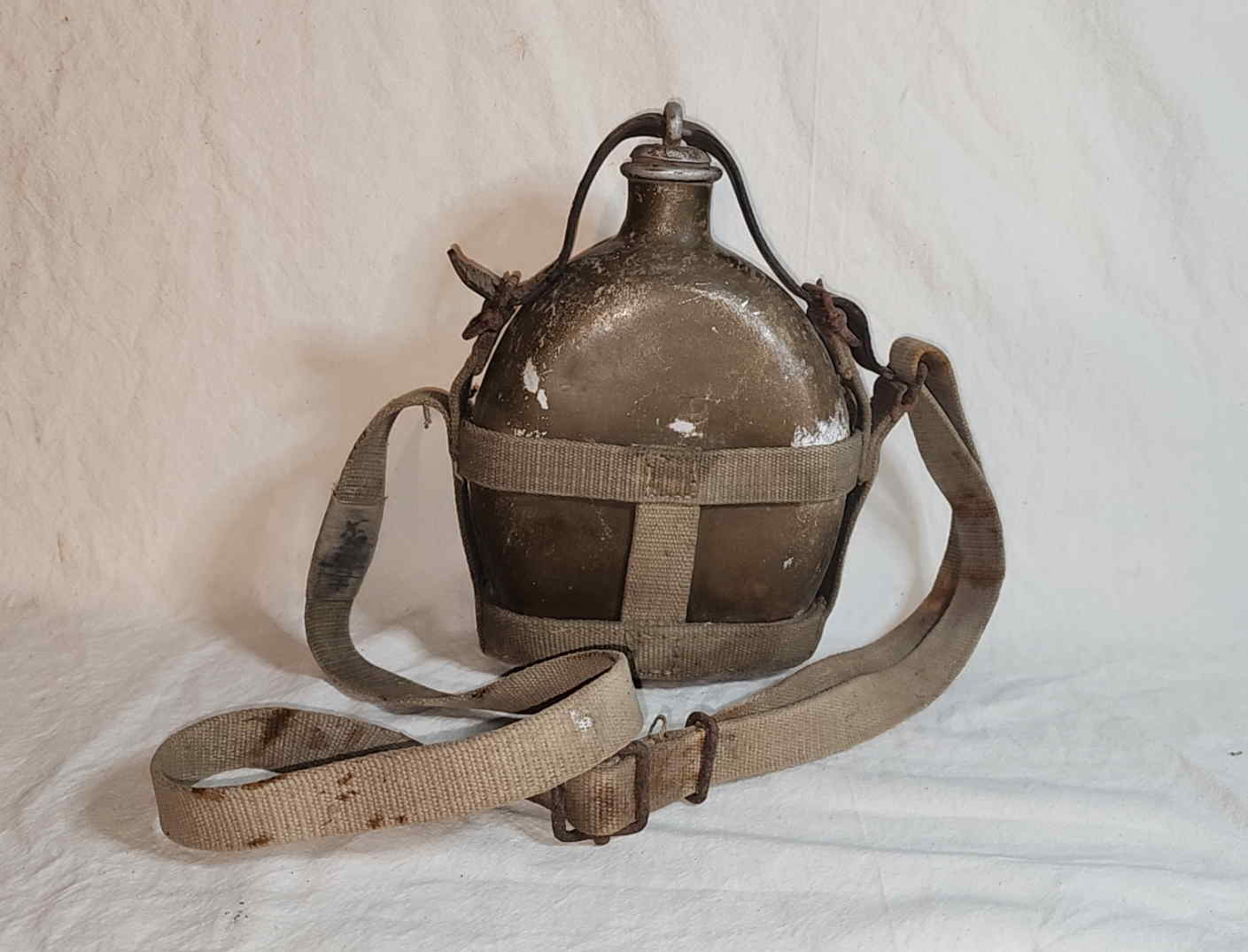
Early-pattern Imperial Japanese Army canteen manufactured by Osaka Aluminum in Kōki 2600, corresponding to 1940, and marked with the owner’s name Kitamura.
Images
Specifications
| General Information | |
|---|---|
| Item | Imperial Japanese Army Shō-5 I-gō Canteen |
| Japanese Designation | 昭五式水筒 伊号 |
| Romanized Designation | Shō-5 Canteen, I-gō |
| Collector Description | Shō-5 First Variation Canteen |
| Country | Imperial Japan |
| Service | Imperial Japanese Army |
| Pattern Introduction | 1930, the fifth year of the Shōwa reign |
| Manufacture Date | Kōki 2600, corresponding to 1940 |
| Capacity | Approximately 1 liter |
| Construction | |
| Body | Flattened oval aluminum bottle with rounded front and comparatively flat reverse |
| Finish | Brown-olive painted exterior |
| Carrier | Cotton-web cradle with upper and lower horizontal bands and vertical supports |
| Shoulder Strap | Adjustable cotton webbing with metal connecting and adjustment hardware |
| Stopper | Aluminum-capped cork stopper with raised retaining eyelet |
| Stopper Retention | Leather strap passing through the stopper eyelet and fastening at the sides |
| Markings | |
| Manufacturer | Osaka Aluminum |
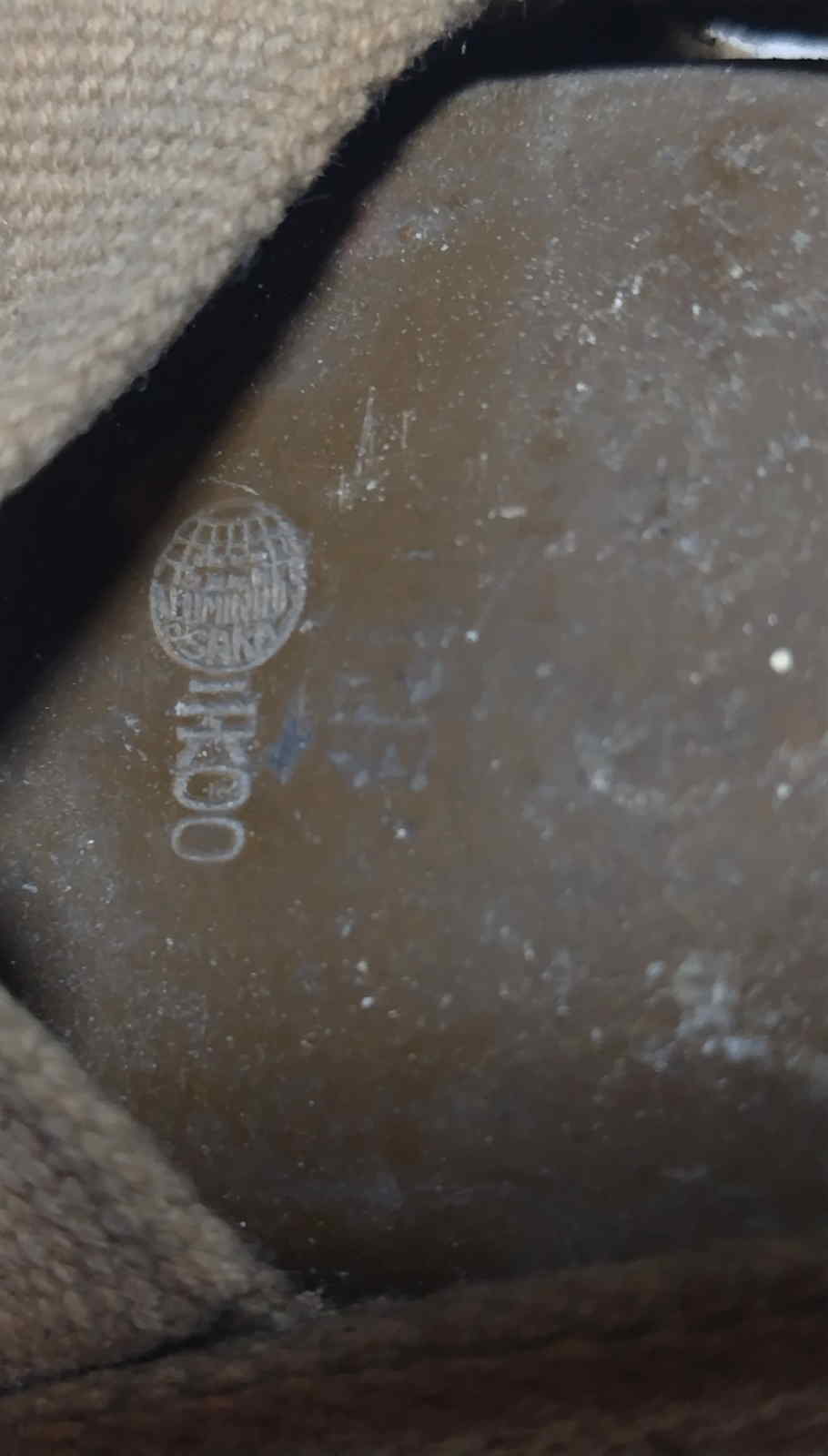
| Maker’s Mark | Globe trademark containing the words ALUMINUM OSAKA |
| Date Mark | 2600 |
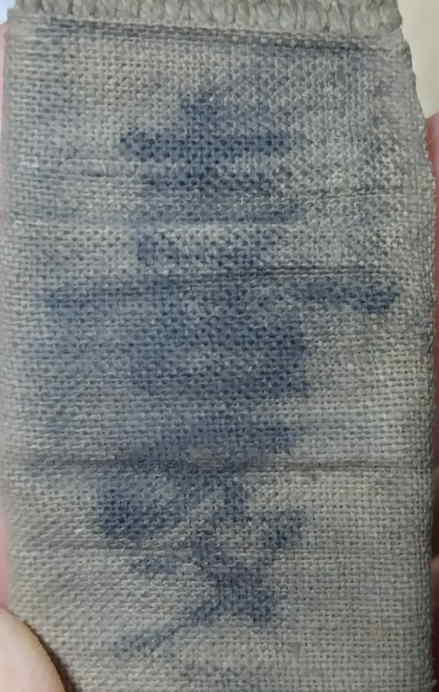
| Owner’s Inscription | 北村 |
| Reading | Kitamura |
Overview
This example is an Imperial Japanese Army Shō-5 I-gō canteen, the early configuration of the Shō-5 family introduced in 1930. It retains the characteristic one-liter painted aluminum bottle, cotton-web carrier, shoulder strap, metal fittings, aluminum-capped cork stopper, and leather stopper-retaining strap.
The designation I-gō, 伊号, applies principally to the original carrier and stopper-retaining arrangement. The leather strap passes through the stopper eyelet and fastens to small metal buckles at the sides of the canteen. This construction, together with the metal shoulder-strap hardware, identifies the early I-gō configuration commonly described by collectors as the first variation.
A stamped globe trademark on the bottle identifies Osaka Aluminum as the manufacturer. The adjacent number 2600 is a Kōki calendar date corresponding to 1940. A faded inked inscription on the carrier appears to read 北村, most naturally read as the family name Kitamura.
Identification & Markings
The canteen’s construction matches the Shō-5 I-gō pattern. The aluminum body has the broad, flattened oval form associated with the Shō-5 series. Its rounded front, flatter reverse, web cradle, leather stopper strap, and surviving metal fittings form a consistent early-pattern assembly.
The manufacturer’s stamp consists of a globe emblem containing the English words ALUMINUM OSAKA. Beside the globe is the number 2600. Read according to the Japanese Imperial Kōki calendar, year 2600 corresponds to 1940.
The sewn cloth panel on the carrier bears a faded vertical name inscription. Kitamura.
No rank, unit, or service number is clearly visible. The inscription therefore preserves a soldier's family surname.
Physical Description
The canteen body is formed from aluminum and retains a substantial portion of its original brown-olive painted finish. The surface shows scratches, chips, oxidation, and handling wear, while the body remains generally well formed without major crushing.
The cotton-web carrier consists of upper and lower horizontal bands joined by vertical webbing sections. The shoulder strap remains attached and retains its metal adjustment and connecting fittings. The webbing is faded and stained, with localized wear consistent with prolonged service and age.
The early aluminum-capped cork stopper remains present. Its raised eyelet receives the narrow leather retaining strap, which runs over the canteen shoulders and connects to the small side buckles. The leather is dry, cracked, and stiff, but the early retaining arrangement remains substantially complete.
Historical Context
The Shō-5 canteen was introduced in 1930 as a larger successor to the earlier, smaller Japanese Army bottle. Its capacity was increased to approximately one liter, giving soldiers a more practical water supply for extended field use.
This canteen was manufactured in 1940 during the Second Sino-Japanese War and approximately one year before Japan entered the wider Pacific War. Its leather stopper strap and extensive metal hardware preserve the early I-gō arrangement used before later wartime simplifications reduced leather and metal consumption.
The date identifies the year in which the bottle was manufactured.
Condition & Collector Notes
The canteen survives in good, field-used condition. Original paint remains over much of the aluminum body, with scattered scratches, paint loss, oxidation, and exposed metal. The web carrier and shoulder strap are substantially complete, with fading, staining, minor fraying, and rust staining around some fittings.
The leather stopper strap is an important identifying component of the I-gō pattern. It is also the most fragile part of the assembly.
The dated Osaka Aluminum mark and surviving owner’s inscription add considerably to the research value of the piece. Together they document its manufacturer, year of production, early carrier configuration, and the association with a soldier's last name Kitamura.
Assessment & Provenance
This piece is an Imperial Japanese Army Shō-5 I-gō canteen manufactured by Osaka Aluminum in Kōki 2600, corresponding to 1940. The painted aluminum bottle remains with its early cotton-web carrier, adjustable shoulder strap, metal fittings, aluminum-capped cork stopper, and leather stopper-retaining strap.
The bottle, carrier, stopper, and hardware are mutually consistent with the early I-gō configuration. The inked carrier inscription reads 北村, or Kitamura. Sourced from Wakayama City, Japan. Documented in its present state. The reported description should be preserved with the artifact record as received.
Research References
Rising Sun History: Japanese Canteens
War Relics Forum: Evolution of IJA Canteens, 1889–1945, Expanded Version